 English
  日本語
日本語  한국어
한국어  français
  Deutsch
  Español
  italiano
  русский
  português
  Türkçe
  العربية
What are you looking for?

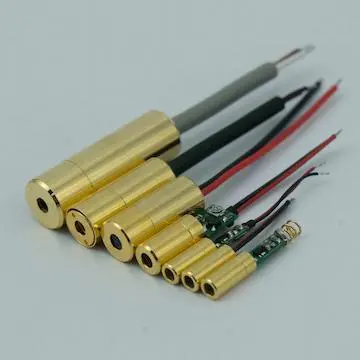
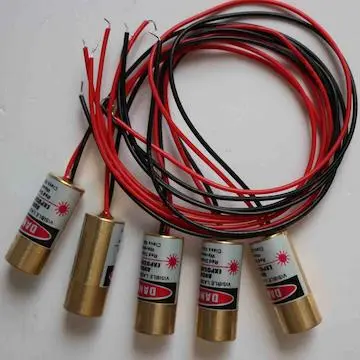
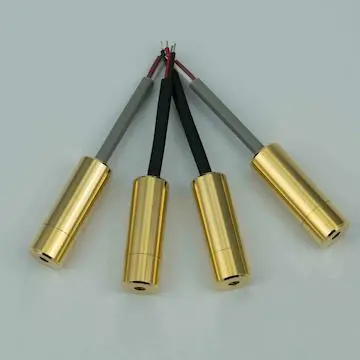
A TTL laser diode is a laser module designed to be controlled by standard TTL (Transistor–Transistor Logic) level signals. Unlike analog modulation, which adjusts output power continuously, TTL modulation provides a digital on/off control — making it ideal for applications that require precise timing, pulsing, or gating of the laser beam.
In TTL modulation, the laser driver accepts digital pulses:
LOW (typically 0–0.8V) → Laser off
HIGH (typically ≥2.4V, often 5V) → Laser on
When a HIGH signal is applied, the driver circuit allows laser emission; when a LOW, emission stops instantly. This binary switching method enables clean signal control and high-speed pulsing, with supported frequencies often ranging from tens of kHz to several MHz (depending on the module).
The TTL Laser Diode leverages the precision of Transistor-Transistor Logic (TTL) signaling to offer unparalleled control over laser emission. This allows for accurate timing and switching of the laser beam, ensuring that it is activated or deactivated at exactly the right moment. This precision is essential in applications such as laser cutting, engraving, and 3D printing, where even the slightest deviation can impact the final product's quality. By eliminating the need for manual adjustments or external controllers, the TTL Laser Diode simplifies the process and ensures consistency across every use.
Despite its compact size, the TTL laser module is designed to efficiently convert electrical energy into laser light. This high-energy conversion efficiency means that less power is wasted, leading to lower energy consumption and reduced operating costs. Furthermore, the diode's construction is optimized for durability, ensuring that it can withstand the rigors of continuous use in demanding environments. Its robust design and reliable performance mean that users can rely on the TTL Laser Diode for long-term use, reducing the need for frequent replacements or repairs.
The TTL Laser Diode's versatility is a testament to its widespread appeal. Whether it's used in industrial automation, medical devices, or consumer electronics, the diode's precision and control capabilities make it an ideal choice for a diverse range of applications. Additionally, we, laser diode module manufacturers, offer customization options to tailor the diode's performance to specific requirements. This includes adjustments to the wavelength, power output, and beam shape, enabling users to optimize the diode for their unique needs. Whether it's enhancing the accuracy of a machine vision system or creating a visually stunning light show, the TTL Laser Diode offers the flexibility to achieve remarkable results.
TTL modulation – Simple, robust, low-cost digital control for turning the beam on/off. Best for pattern projection, beam gating, and pulsed experiments.
Analog modulation – Allows smooth adjustment of output power (voltage proportional to brightness). Required where variable beam intensity is needed.
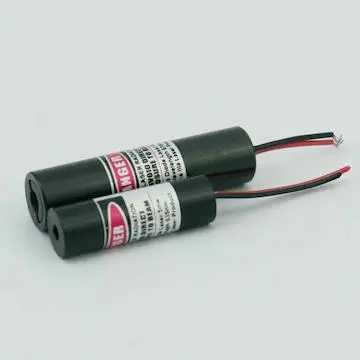
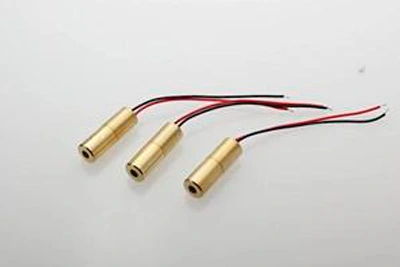
AimLaser offers several TTL laser modules tailored for precise pulsed laser applications:
The 520nm PWM/TTL Modulation Green Laser Pointer Module outputs 5mW of green laser light. It supports pulse-width modulation and TTL digital on/off control, operating at 3–5V DC. This module is well-suited for applications requiring a visible green beam with reliable digital modulation.
The 450nm TTL Modulation Blue Laser Pointer Module delivers up to 30mW blue laser output with TTL pulse control. The compact module (Φ12×40mm) operates at 5V DC and is popular for OEM instrumentation needing stable, high-quality blue laser pulses.


Industrial positioning and alignment
Scientific experiments and optical research
Barcode scanning and sensing
Pattern projection and imaging
OEM instrumentation requiring precise beam gating
Aiming Laser Technology Co., Ltd. (AimLaser) has been manufacturing solid-state lasers and diode laser modules for OEM instrument applications since 2012. We provide free-space and fiber-coupled lasers covering 405–980nm and 0.4mW–6000mW output. Our R&D team of over 25 engineers specializes in optics, hardware, and software design, delivering customized laser solutions with reliable driver design, compact structures, and cost-effective engineering.
Q1: What does TTL mean for a laser diode?
TTL stands for Transistor–Transistor Logic, a digital on/off control method using standard voltage levels (typically 0V = off, 5V = on).
Q2: Can TTL modulation adjust brightness?
No. TTL provides binary on/off control. For continuous brightness control, analog modulation is required.
Q3: What frequency range can TTL modulation support?
It depends on the laser driver, but many modules support frequencies from tens of kHz up to several MHz. Always check the product specifications.